Far East Cable's ¥1.99B AIDC Fiber Preform Project Tops Out — What It Means for ODN Suppliers
By Jergeo Engineering Team | August 2026 · 10 min read · Based on Far East Cable official announcements, Securities Times, and industry reporting

Summary
Far East Cable's ¥1.99 billion AIDC fiber preform project completed its main structure on August 18, with core deposition systems and draw towers already moving in. The project targets 800 tons of preform capacity by 2026 and 2,100 tons by 2027 — a 7x increase from current levels. Meanwhile, Changfei Fiber's ¥159M hollow-core fiber contract and at least ¥7B in new capacity announcements from Rifeng and Han's Laser confirm that China's fiber industry is in the middle of an AIDC-driven expansion cycle. For ODN passive component suppliers, the signal is straightforward: more preform means more fiber, more fiber means more connections, and more connections mean more cabinets, patch panels, and distribution frames.
The Topping Out: ¥1.99 Billion, 18 Months, 7x Capacity
On August 18, Far East Cable (远东股份, SSE: 600869) announced that the main structure of its AIDC full-synthesis fiber preform rod manufacturing project has been topped out. The project, implemented through controlling subsidiary Jiangsu Far East High-Silicon New Materials in Yixing, Jiangsu, represents a total investment of approximately ¥1.988 billion (~$277M USD).
The timing is aggressive. Core production equipment has already been moved into the facility and is undergoing commissioning — specifically, a full-synthesis VAD+OVD deposition system and a high-precision fiber draw tower. According to Far East's official announcement, the company expects the facility to reach 800 tons of annual preform capacity by August 2026, scaling to 2,100 tons by 2027. For context, Far East's current preform capacity sits at 300 tons per year, with an additional 10 million fiber-kilometers of annual fiber drawing capacity. This represents roughly a 7x capacity increase in preform production over 18 months.
The project was funded through a ¥2 billion private placement that received formal acceptance from the Shanghai Stock Exchange on July 27 (上证上审(再融资)〔2026〕219号), as we covered three weeks ago. The topping out three weeks later suggests the company is moving at full speed.
What "Full Synthesis" Means — and Why It Matters
One detail buried in the project announcement deserves attention: Far East is using a VAD+OVD full-synthesis process route for this project. This is a deliberate technology choice, and it tells you something about how tight the fiber supply chain actually is.
Most Chinese fiber manufacturers use one of three methods to produce preform rods: VAD (vapor axial deposition), OVD (outside vapor deposition), or MCVD (modified chemical vapor deposition). The traditional approach involves first creating a small-diameter "seed rod" or purchasing preform blanks (套柱, called "RIC preforms" in English) from upstream suppliers, then depositing additional layers to build the final preform diameter.
Far East is skipping the blank-purchasing step entirely. VAD+OVD full synthesis builds the preform rod from scratch through sequential vapor deposition — no external RIC blanks needed. This eliminates a significant upstream dependency at a time when preform rod blanks have become a supply bottleneck.
Think of it this way: when fiber demand surges, everyone needs more preform rods. The companies that can only expand by buying more blanks from the same constrained supply chain face a ceiling. Companies that build full-synthesis capability control their entire production chain — from chemical precursors to finished preform to drawn fiber. It's a more capital-intensive approach, but it removes a critical supply chain vulnerability.
Far East's product lineup for the new facility confirms the AIDC focus: the output will include specialty preform rods paired with optical fiber, hollow-core fiber, polarization-maintaining (PM) fiber, and MPO/MTP jumper assemblies. The company has already built what it calls a complete supply chain from "preform rod to fiber to MPO/MTP pre-terminated jumpers," and data center shipments now account for 80% of its total output.
The Broader Expansion Wave: It's Not Just Far East
Far East's topping out is one data point. The pattern becomes clearer when you look at what else is happening across China's fiber industry in the same period.
Changfei Fiber's Hollow-Core Breakthrough
Changfei Fiber (长飞光纤, YOFC) won a ¥159 million contract from China Telecom Guangdong for hollow-core fiber cable plus G.654.E cable framework procurement, capturing 100% share of what is reportedly the largest single hollow-core fiber cable procurement project in China, according to JRJ (金融界) reporting.
For those unfamiliar with hollow-core fiber: it replaces the traditional solid glass core with an air core, allowing light to travel at approximately 47% faster than in standard fiber, with latency reduced by roughly 30%. This is not a theoretical improvement — Changfei's hollow-core fiber has already been deployed in Hong Kong Telecom's 3.2Tbps AI data center interconnect channel, with cumulative deliveries exceeding 10,000 fiber-kilometers.
Hollow-core fiber is still expensive and years away from commodity pricing. But a ¥159M contract from a tier-one Chinese carrier, paired with real AIDC deployment at terabit scale, signals that next-generation fiber technology is moving from the lab into production environments.
Rifeng: ¥700M, 300 Tons of Preform
On August 17, Rifeng Co. (日丰股份) disclosed an investment of approximately ¥700 million to build a new production line with 300 tons of annual fiber preform capacity plus 10 million fiber-kilometers of fiber drawing capacity. This is a greenfield project — Rifeng is building from zero into a market that is already supply-constrained.
Han's Laser: ¥2.52B From Outside the Industry
Perhaps the most telling signal: a subsidiary of Han's Laser Technology Industry Group (大族激光) has committed up to ¥2.52 billion for a project building 60 million fiber-kilometers of annual fiber drawing capacity and associated preform rod production. Han's Laser is not a fiber company. Its fiber-related revenue in 2025 was ¥40.7 million. The fact that a laser equipment manufacturer is investing 60x its current fiber revenue into fiber production tells you how attractive this market looks to capital allocators right now.
Combined, these projects add up to the largest wave of fiber capacity expansion China has seen since the FTTH buildout of the early 2010s — except this time, the demand driver is not residential broadband. It's AI data centers.
The ODN Perspective: What This Means for Passive Infrastructure
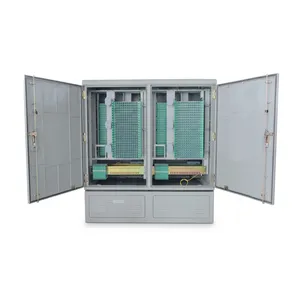
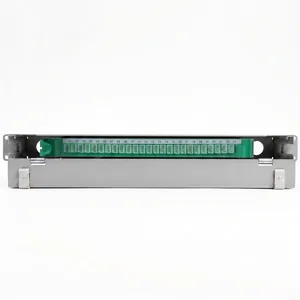
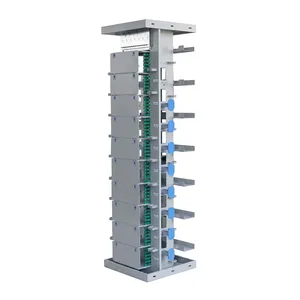
Here is where we step away from the preform rod headlines and look at what this means for the companies and buyers who deal in ODN passive infrastructure — fiber distribution cabinets, optical distribution frames, patch panels, and splice closures.
More Preform → More Fiber → More Connections → More ODN
The logic chain is simple but the scale is not. When Far East expands from 300 tons to 2,100 tons of preform capacity, that additional 1,800 tons eventually becomes fiber deployed in real networks. Every meter of deployed fiber needs passive infrastructure to terminate, distribute, and manage it. A fiber distribution cabinet doesn't care whether the fiber inside carries FTTH traffic or AIDC interconnects — it still needs to protect the splices, organize the fibers, and provide weatherproof termination points.
But AIDC applications create a different demand profile than traditional telecom. A single GPU cluster rack in an AI training facility may require 10x the fiber connections of a standard server rack, driven by the need for low-latency inter-rack interconnects using 400G and 800G optical links. This pushes fiber density requirements to levels that strain conventional ODN designs.
Vertical Integration vs. Independent Supply
Far East's decision to build an integrated "preform → fiber → MPO/MTP jumper" supply chain is strategically sound for the company. It captures margin across the full value chain and ensures quality control from raw material to connector assembly.
For ODN procurement managers, this vertical integration trend is worth watching but doesn't eliminate the role of independent passive component suppliers. Here's why:
First, fiber manufacturers who build MPO/MTP jumper lines are primarily producing for their own contracted customers — the hyperscalers and large carriers who buy fiber in volume. They have little incentive to serve the mid-market: enterprise data centers, colocation providers, and regional ISPs who need smaller batches with faster turnaround.
Second, ODN passive infrastructure like FDCs and ODFs are fundamentally sheet metal products, not optical components. The value proposition for a fiber manufacturer to vertically integrate into sheet metal enclosure production is weak — the economics, tooling, and supply chains are completely different. Fiber companies integrate downstream into active/passive optical components (jumpers, connectors, splitters), not into the cabinets and frames that house them.
Third, the mid-market ODN buyer needs flexibility — mixed connector types, custom port configurations, varied IP ratings for indoor and outdoor deployment. Vertically integrated fiber manufacturers optimize for volume standardization. Independent ODN suppliers optimize for configuration variety and minimum order flexibility.
The Density Bottleneck
One emerging constraint in AIDC deployments deserves specific attention: fiber termination density. When a data center needs to manage 3,456 fibers in a single equipment rack — which is a realistic number for a high-density GPU cluster interconnect point — the physical space available for patch panels and distribution frames becomes the limiting factor, not the fiber itself.
This is driving demand for higher-density FDC designs and ODF configurations that pack more ports into standard 19-inch rack units. Traditional 288-port FDCs, designed for FTTH distribution points, are insufficient for AIDC applications where 576-port or even 1,152-port configurations are becoming the baseline requirement for main distribution areas.
What Procurement Teams Should Consider
The capacity expansion wave now cresting across China's fiber industry will take 12–18 months to fully materialize as deployed fiber. Based on the project timelines announced, meaningful new supply should begin reaching the market from mid-2027 onward. But the ODN infrastructure requirements are front-loaded — you need the cabinets, frames, and panels before you can deploy the fiber.
Three practical considerations for ODN procurement:
Plan for density headroom. If your current FDC specification is 288 ports, consider whether 576-port configurations would provide adequate expansion capacity for AIDC-related fiber growth. The cost differential between a 288-port and 576-port cabinet is modest; the cost of replacing an undersized cabinet in the field is not.
Account for AIDC-compatible fiber types. As hollow-core fiber and polarization-maintaining fiber enter commercial deployment, ODN infrastructure needs to accommodate different cable diameters, bend radius requirements, and connector types. Standard splice trays designed for G.652D fiber may not fit PM fiber or hollow-core cable without modification.
Lock in supply before the fiber arrives. History from the FTTH buildout shows that passive infrastructure procurement often lags fiber procurement by 3–6 months — creating deployment bottlenecks when the fiber arrives but the cabinets and distribution frames haven't been delivered. With multiple billion-dollar fiber projects reaching production simultaneously in 2027, ODN equipment supply could face its own capacity constraints.
Sources
This article is based on Far East Cable (远东股份, SSE: 600869) official announcements regarding the August 18, 2026 AIDC preform project topping out. Investment figures and capacity data sourced from 同花顺财经 (10jqka) and 证券时报 (Securities Times). Changfei Fiber's China Telecom contract data from 金融界 (JRJ) and 东方财富 (Eastmoney). Rifeng and Han's Laser project data from JRJ reporting (August 17, 2026). Industry context from CRU Group 2026 optical cable market report and China Electronic Components Industry Association (中国电子元件行业协会) statements.