ODN Equipment Guide: Complete List of Fiber Network Components
By Jergeo Engineering Team | Published July 2026 · 12 min read
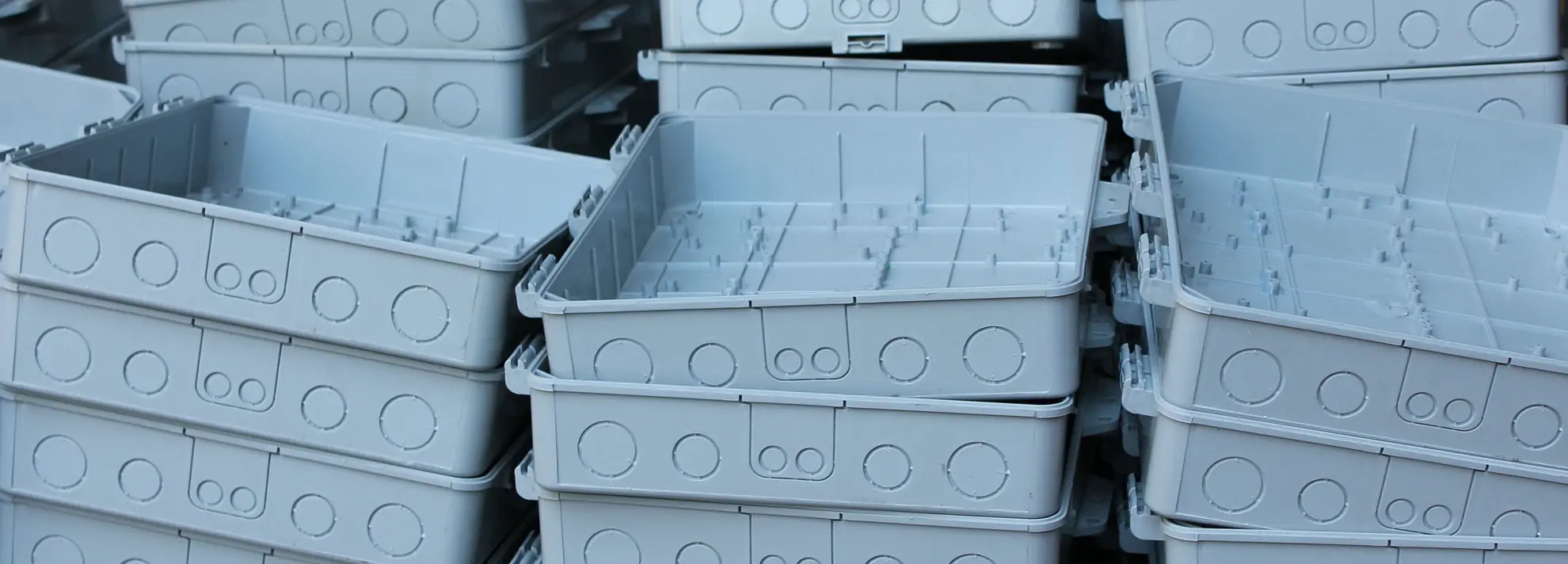
An Optical Distribution Network (ODN) is the physical fiber infrastructure that connects a central office or headend to subscriber premises in a PON (Passive Optical Network) architecture. The ODN is entirely passive — no powered equipment, no active electronics — which means every component must be reliable, weather-resistant, and serviceable for decades without replacement.
Summary
A complete ODN includes ODFs at the central office, FDCs at distribution points, FDBs at building entries, splice closures for cable joints, PLC splitters for signal splitting, and terminal boxes at the subscriber end.
This guide provides a complete inventory of the equipment types that make up an ODN, explains the function of each component, and outlines the key specifications you need to evaluate when specifying for a project.
The ODN architecture: from central office to subscriber
Before listing the equipment, it helps to understand where each component sits in the network topology. A typical PON deployment follows a three-segment structure:
- Feeder segment: backbone fiber runs from the central office (CO) or headend to the first distribution point. Cables here are high-count (typically 144–864 fibers) and run through underground ducts or aerial routes.
- Distribution segment: fiber from the distribution point branches out toward serving areas. Fiber Distribution Cabinets (FDCs) sit at this boundary and house splitters that divide the signal from one feeder fiber into multiple distribution fibers.
- Drop segment: the final fiber run from the last distribution point to the subscriber's premises (home, office, or base station). Drop cables are smaller (1–24 fibers) and connect via Outdoor Termination Boxes or Fiber Distribution Boxes.
Each segment requires specific types of enclosures, and passive components. Below is a complete inventory organized by deployment location.
Outdoor fiber equipment
1. Fiber Distribution Cabinet (FDC)
The Fiber Distribution Cabinet is the largest enclosure in the outside plant. It sits at the boundary between feeder and distribution segments — typically on a sidewalk, building wall, or inside a pedestal — and serves as the primary splitting and distribution node.
Function: houses PLC splitters, terminates feeder cables, routes distribution cables, and provides splice storage for excess fiber length.
Typical specifications:
- Capacity: 72 to 1,152 ports per cabinet
- Material: SMC (Sheet Molding Compound), stainless steel, or ABS
- IP rating: IP65 or IP67 for outdoor deployment
- Cable entries: 8–16 ports for feeder and distribution cables
- Operating temperature: -40°C to +65°C
Jergeo's JFDC series covers the full range from compact 72-port wall-mount units to 1,152-port floor-standing cabinets. All models use standard 19-inch mounting rails internally for modular adapter and splitter trays.
2. Fiber Distribution Box (FDB)
The Fiber Distribution Box is a smaller, more compact version of the FDC. It serves the same function — termination, splitting, and distribution — but in applications where a full-size cabinet would be oversized or impractical.
Function: terminates smaller feeder cables (12–72 fibers), houses compact splitters, and provides distribution points in dense urban or indoor environments.
Typical specifications:
- Capacity: 4 to 72 ports
- Material: ABS plastic or sheet metal
- IP rating: IP55 to IP65
- Mounting: wall-mount, pole-mount, or rack-mount
FDBs are common in multi-dwelling unit (MDU) buildings, enterprise wiring closets, and FTTH drop points where space is limited. Jergeo's JFDB series includes models from 4-port desktop boxes to 72-port wall-mount enclosures.
3. Fiber Splice Closure (FSC)
A Fiber Splice Closure (also called a fiber joint closure or fiber optic splice enclosure) protects fiber splices where two cables are joined together. Unlike cabinets and boxes, closures do not typically house splitters or adapters — they are purely for protecting fusion splice points.
Function: protects fiber splices from moisture, dust, and mechanical damage at cable joints. Used at every point where cables are spliced together — mid-span, at poles, or in manholes.
Typical specifications:
- Splice capacity: 24 to 288 splices per closure
- Material: SMC, PC (polycarbonate), or aluminum alloy
- IP rating: IP68 for direct burial; IP67 for aerial/pedestal
- Types: dome (vertical) or inline (horizontal)
- Cable ports: 4–12 entry ports with heat-shrink or mechanical sealing
Jergeo's JFSC series includes dome closures for aerial and pole-mount deployment, and inline closures for manhole and direct-burial applications. All models use reusable silicone seals for re-entry during network upgrades.
4. Outdoor Termination Box (OTB)
The Outdoor Termination Box is the last passive enclosure before the fiber enters the subscriber's premises. It sits on a building wall, inside a basement, or on a pole near the drop point.
Function: terminates the distribution or drop cable, provides adapter ports for patch cord connection to the subscriber's drop cable, and protects the termination splices from weather.
Typical specifications:
- Capacity: 2 to 192 ports
- Material: sheet metal or ABS
- IP rating: IP65 minimum
- Mounting: wall-mount (most common) or pole-mount
- Connector types: SC, LC, or FC adapters
In a centralized splitting architecture (where splitters sit in the FDC), the OTB contains only adapter ports and no active splitters. In a distributed splitting architecture (where splitters are distributed closer to subscribers), the OTB may also house small PLC splitters. Jergeo's JOTB series covers 2-port to 192-port configurations in both splitter and splitter-less designs.
Indoor fiber equipment
5. Optical Distribution Frame (ODF)
The Optical Distribution Frame is the indoor equivalent of the outdoor FDC. It sits inside a telecom equipment room or data center and provides the structured patching point between outside plant cables and active equipment (OLTs, switches, routers).
Function: terminates incoming feeder or distribution cables, provides adapter ports for cross-connecting to active equipment via patch cords, and houses splice storage for cable preparation.
Typical specifications:
- Form factor: 19-inch rack mount, 1U to 6U height
- Capacity: 12 to 144 ports per panel
- Material: cold-rolled steel, powder-coated
- Design types: fixed, sliding, rotary, or flip-up cover
- Connector types: LC, SC, FC adapters
Jergeo's JODF series offers seven models covering standard, rotary, sliding, and flip-up designs. The sliding and rotary models are particularly useful in dense environments where technicians need rear access for cable management without pulling the entire unit from the rack.
6. Fiber Optic Patch Panel
While ODFs are complete enclosed frames with cable management and splice storage, Fiber Optic Patch Panels are bare mounting frames designed to hold adapter plates and splice trays. They mount directly in standard 19-inch racks.
Function: provides a structured mounting point for adapter plates and splice trays within a rack or cabinet. Used in data centers and central offices where modular flexibility is needed.
Key difference from ODF: a patch panel is the adapter and splice mounting structure only; an ODF includes the complete enclosure with cable management, grounding, and rear cable routing.
Passive optical components
7. PLC Splitters
PLC (Planar Lightwave Circuit) splitters are the core passive component that divides optical power from one input fiber into multiple output fibers. They are the enabling technology for PON architecture — a single OLT port can serve 8, 16, 32, or 64 subscribers through a single splitter.
Function: passively divides optical power. No electricity required. Sits inside FDCs, FDBs, OTBs, or in dedicated splitter cassettes.
Typical specifications:
- Split ratios: 1×4, 1×8, 1×16, 1×32, 2×32
- Wavelength: 1260–1650nm (full PON band)
- Connector types: SC/APC, LC/APC, or bare fiber pigtail
- Form factors: bare splitter module, cassette, card type, or tray-mount
- Insertion loss: depends on split ratio (e.g., ~10.5 dB for 1×8, ~17 dB for 1×32)
PLC splitters are used in two primary architectures: centralized splitting (one large splitter at the FDC) and distributed splitting (multiple smaller splitters cascaded from FDC to OTB). The choice depends on fiber count, distance, and network design philosophy.
8. Fiber Optic Adapter Panels
Adapter panels are modular plates that hold duplex or simplex fiber adapters (LC, SC, FC). They mount into ODFs, patch panels, FDCs, and OTBs. The adapter type determines which patch cords and connectors are compatible with the installation.
Common configurations:
- LC duplex: 12 or 24 ports per panel (standard for data centers)
- SC simplex or duplex: 12 or 24 ports per panel (common in FTTH)
- Mixed: panels that accept both LC and SC in the same housing (useful during migration)
Auxiliary equipment and accessories
9. Splice Trays
Splice trays are circular or rectangular trays that hold fusion splice protectors (sleeves) inside an enclosure. They keep splices organized, protected from bending, and accessible for future rework.
Typical capacity: 12 to 24 splices per tray. Multiple trays stack inside FDCs and closures.
10. Fiber Management Accessories
Every enclosure needs cable management — routing channels, bend radius limiters, Velcro straps, and cable glands. These accessories ensure that fiber cables are not bent below their minimum bend radius (typically 30mm for single-mode fiber) and that cables are secured against pull forces.
11. Fiber Enclosure Cabinets and Racks
Beyond the ODN-specific equipment listed above, the central office or data center may require standard 19-inch racks and cabinets to house ODFs, patch panels, and active equipment. These are typically standard IT racks (42U, 47U) with cable management bars and grounding buses.
How to specify ODN equipment for a project
When specifying ODN equipment for a deployment, consider the following parameters in order:
- Network topology: centralized or distributed splitting? This determines where splitters are placed and what capacity each enclosure needs.
- Fiber count: how many fibers need to be terminated, split, or spliced at each node? This drives enclosure capacity selection.
- Deployment environment: outdoor, indoor, direct burial, aerial, or manhole? This determines material selection (SMC for outdoor, steel for indoor) and IP rating.
- Connector types: which adapters are compatible with the rest of the network? SC/APC is the standard for FTTH; LC/APC is the standard for data centers.
- Future expansion: plan for 20–30% spare capacity at each node to avoid costly replacements when subscriber count grows.
Jergeo provides a complete product line covering every ODN equipment type listed above. Our JFDC, JFDB, JFSC, JOTB, and JODF series are designed to work together as a unified system — adapter panels, splice trays, and cable management accessories are cross-compatible across the product range.
Related Products
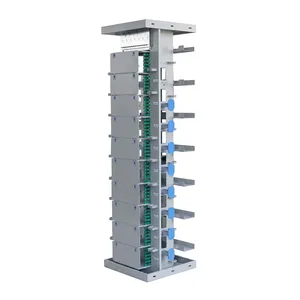
JODF-A1 Optical Distribution Frame
720 ports ODF with 42U capacity
View Product →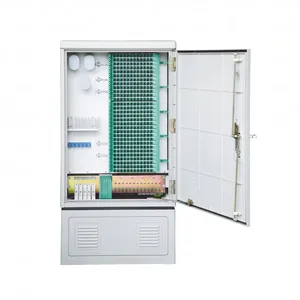
JFDC-288A Fiber Distribution Cabinet
288 ports FDC with wall/pole mounting options
View Product →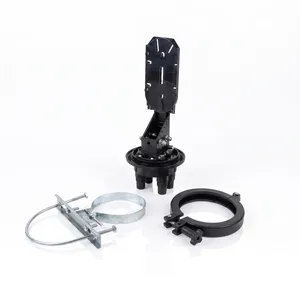
JFSC-L144A Horizontal Fiber Splice Closure
Horizontal 144 ports splice closure with PC material
View Product →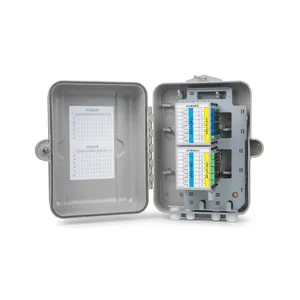
JFDB-64A Fiber Distribution Box
64 ports FDB with SMC material and integrated splitter
View Product →References
- The Fiber Optic Association (FOA) — comprehensive fiber optic technology reference and certification standards
- IEC Webstore — international standards for fiber optic components and enclosures
- ITU-T G-Series — transmission systems and media recommendations for optical networks