FDC vs FDH vs ODC: What's the Difference?
By Jergeo Editorial Team | Last updated: July 2026 · 10 min read
Summary
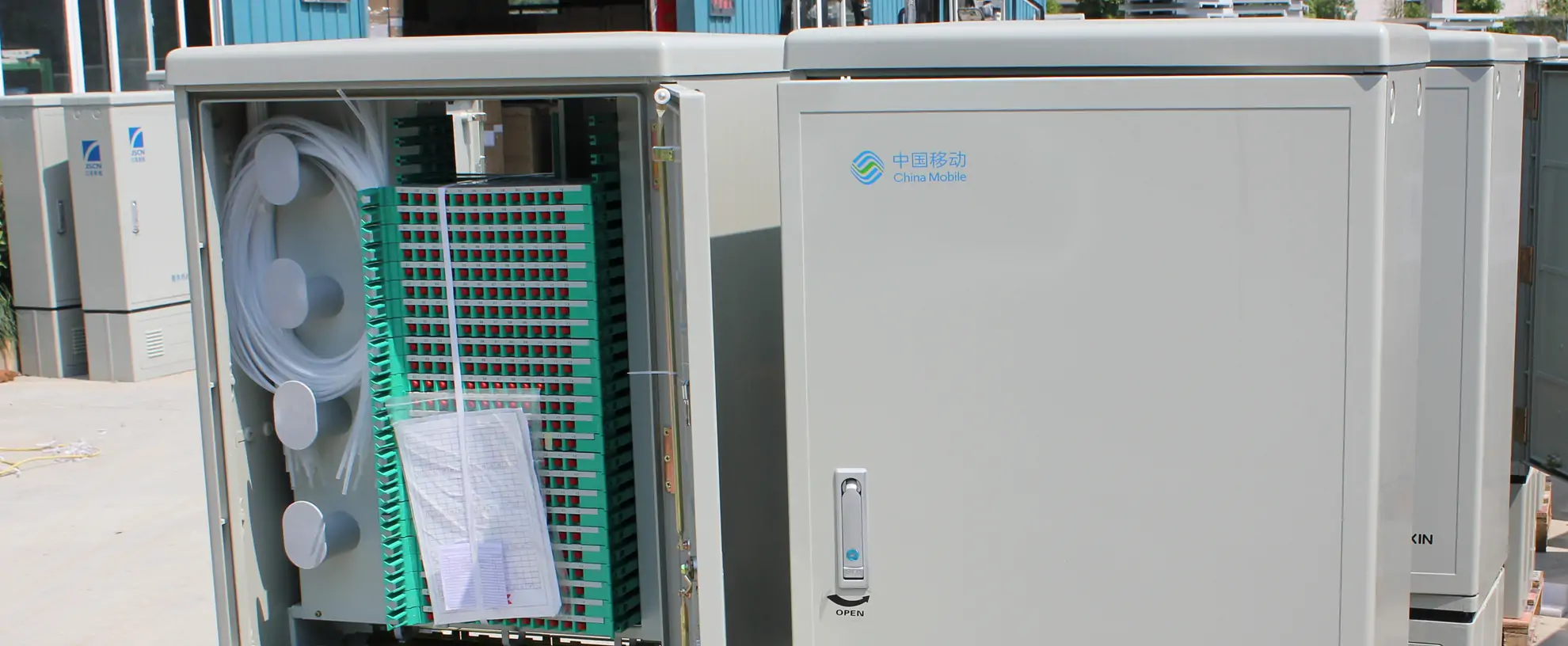
FDC, FDH, and ODC are three regional names for the same device: a large outdoor fiber cabinet that converts feeder cables into distribution cables in a PON/FTTH network. FDC is used in Asia and Africa, FDH in North America, ODC in the Middle East. The real confusion comes when people mix up these large cabinets with smaller downstream devices like FDTs or FATs. Our advice: pick your equipment by function and network position, not by the name on the datasheet.
If you work in fiber optic procurement, you have probably seen datasheets labeled "Fiber Distribution Cabinet" from one supplier and "Fiber Distribution Hub" from another — for what looks like the exact same product. Then a Middle East tender shows up calling it an "Optical Distribution Cabinet." Are these three different devices? Do they have different specs? Should you stock all three?
Short answer: no. They are the same box. The naming split is a geography problem, not a technical one. But the confusion does not stop there. A fourth term — FDT — actually refers to a different, smaller device, and some suppliers use "FDC" to mean both. That is where the real mistakes happen.
We have shipped fiber cabinets to 70+ countries. The same JFDC-288A arrives on a Canadian project spec as an "FDH" and on a Saudi project as an "ODC." The hardware is identical. So let us clear this up once and for all.
FDC vs FDH vs ODC: Quick Comparison Table
Here is the naming map. All three terms describe a large outdoor enclosure — typically 144 to 1,152+ fiber ports — that sits at the feeder-to-distribution transition point in a passive optical network.
| Term | Full Name | Primary Region | Typical Capacity | Network Position |
|---|---|---|---|---|
| FDC | Fiber Distribution Cabinet | Asia (China, SE Asia), Africa | 144–1,152 ports | Feeder → Distribution |
| FDH | Fiber Distribution Hub | North America (US, Canada) | 144–864 ports | Feeder → Distribution |
| ODC | Optical Distribution Cabinet | Middle East | 144–576 ports | Feeder → Distribution |
| Street Cabinet | — | Europe (UK, Germany, etc.) | 144–864 ports | Feeder → Distribution |
In North America, the same equipment is called a fiber distribution hub (FDH). In Europe, it is simply a street cabinet. And in the Middle East, it goes by optical distribution cabinet (ODC).
The function is identical. The physical design is identical. The only difference is which continent your procurement team sits on.
Where the Naming Comes From
There is no single global standard that dictates what to call this equipment. The ITU-T defines the GPON architecture (G.984) with functional blocks like OLT, ONT, and ODN — but it does not assign names to every piece of passive hardware. That left a vacuum, and different regions filled it with different terms.
North America picked up "FDH" from major equipment vendors. CommScope's FDH 5000 series is one of the most widely deployed fiber hubs in the US. When AT&T, Verizon, and other telcos write their specs, they say "FDH." So every supplier selling into North America adopted that term.
Asia and Africa went with "FDC." Chinese manufacturers — who supply much of the world's passive ODN hardware — translated 光纤配线柜 directly as "Fiber Distribution Cabinet." Since most African and Southeast Asian operators source from the same supply chain, "FDC" became the default term there.
The Middle East landed on "ODC" — "Optical Distribution Cabinet." The origin is less clear, but it likely came from early deployments by European consultants who wanted to distinguish "optical" from older copper distribution cabinets. The term stuck in Gulf state tenders.
Europe simply calls it a "street cabinet" — no acronym needed, since it sits on the street. This is the most descriptive name of the bunch, and honestly the least confusing.
Now Here Is Where It Gets Confusing: FDT Is a Different Device
If the story ended with "FDC = FDH = ODC, just different names," this article would be three paragraphs long. The real mess starts when you add FDT into the picture.
FDT — Fiber Distribution Terminal — is a different device. It sits downstream of the FDC/FDH, closer to end users. Typical FDT capacity is 24–96 ports. It is smaller, lighter, and often wall-mounted or pole-mounted rather than ground-standing.
| Feature | FDC / FDH / ODC | FDT / FAT |
|---|---|---|
| Port Count | 144–1,152+ | 4–96 |
| Physical Size | Large ground cabinet (1.5m+ tall) | Small wall/pole box |
| Network Layer | Feeder → Distribution transition | Distribution → Drop transition |
| Mounting | Ground / plinth | Wall / pole / pedestal |
| Splitter Housing | Often yes (1:8 or 1:16 splitters) | Sometimes (1:4 or small splitters) |
| Who Buys It | Tier-1 ISPs, national operators | Last-mile contractors, local telcos |
Here is the problem: some suppliers — especially smaller factories — label their FDT products as "FDC" because the word "cabinet" sounds more substantial. We have seen 48-port wall-mount boxes sold as "Fiber Distribution Cabinets" on Alibaba. That is not wrong in a legal sense, but it confuses buyers who expect a ground-standing 288-port unit when they see "FDC."
We had a procurement manager from a West African ISP tell us: "I ordered 200 FDCs from Supplier A and 200 FDCs from Supplier B. Supplier A sent me ground cabinets. Supplier B sent me wall boxes. Both said FDC on the spec sheet." That is the naming problem causing real money waste.
According to the Fiber Optic Association (FOA), the ODN hierarchy follows a clear functional structure from central office to subscriber. The key is to understand which layer each device sits in — not what it is called.
The Full Naming Map: Other Terms That Get Mixed In
Beyond FDC, FDH, ODC, and FDT, there is a whole alphabet of fiber distribution terms that buyers and engineers encounter. Here is the complete cheat sheet:
| Acronym | Full Name | What It Actually Is |
|---|---|---|
| FDC | Fiber Distribution Cabinet | Large outdoor cabinet, feeder → distribution (Asia/Africa) |
| FDH | Fiber Distribution Hub | Same as FDC (North America) |
| ODC | Optical Distribution Cabinet | Same as FDC (Middle East) |
| FDT | Fiber Distribution Terminal | Smaller unit, downstream of FDC, distribution → drop |
| FAT | Fiber Access Terminal | Access-level termination point, close to subscribers |
| FDB | Fiber Distribution Box | Small box (not a cabinet), typically 4–96 ports |
| OCC | Optical Cross-Connection Cabinet | Fiber-to-fiber cross-connect, different internal layout |
| NAP | Network Access Point | Last shared distribution point before individual drops |
| CDO | Central Distribution Optical Box | European/Latin American term for distribution point |
| ODF | Optical Distribution Frame | Indoor rack-mount frame at central office / exchange |
The pattern is clear: the "big box" terms (FDC, FDH, ODC) are interchangeable. Everything else — FDT, FAT, FDB, NAP — refers to progressively smaller devices further downstream toward the subscriber.
The ODN Network Hierarchy: Where Each Device Fits
Understanding the naming becomes much easier when you see where each device sits in the optical distribution network (ODN). Here is the signal path from central office to subscriber:
OLT (Central Office) → ODF (Indoor Distribution Frame) → FDC / FDH / ODC (Outdoor Cabinet, Feeder → Distribution) → FDT / FAT (Distribution Terminal, closer to users) → NAP (Network Access Point, last shared point) → FTB / NID (Fiber Termination Box at premises) → ONT (Subscriber equipment)
The FDC/FDH/ODC sits in the middle — between the ODF at the central office and the FDT/NAP near the subscriber. It is the main outdoor distribution point for a neighborhood or cluster of buildings. The ODF (for a detailed comparison, see our ODF vs Fiber Patch Panel guide) handles the indoor side at the exchange.
This hierarchy is consistent regardless of what anyone calls the cabinet. If a tender document says "FDH," you know they mean the large outdoor cabinet at the feeder-distribution boundary. If it says "FDC," same thing. If it says "ODC," still the same thing.
How to Choose: Function Over Name
When you are specifying equipment for a project, stop asking "do I need an FDC or an FDH?" That question has no useful answer. Instead, define the functional requirements:
- Port count — How many fibers need to be terminated and distributed? This determines the physical size. 144 ports needs a different cabinet than 576 ports.
- Network position — Is this at the feeder-to-distribution boundary (→ FDC/FDH class), or at the distribution-to-drop boundary (→ FDT/FAT class)? This is the single most important distinction.
- Environment — Indoor, sheltered outdoor, or fully exposed? This determines the IP rating and material. For exposed outdoor, you need IP65 with SMC or steel construction. Our SMC vs Steel vs ABS material guide covers this in detail.
- Mounting — Ground/plinth, wall, or pole? Large cabinets (144+ ports) are almost always ground-mounted. Smaller terminals can go on walls or poles.
- Splitter integration — Does the cabinet house PLC splitters? At the FDC/FDH level, you typically integrate 1:8 or 1:16 splitters. Make sure the internal layout supports your splitter cassette format.
Once you have these five parameters locked down, you just tell your supplier: "I need a 288-port, IP65, ground-mounted outdoor cabinet with SMC shell, splitter-ready." The supplier will then give you whatever their local market calls it — FDC, FDH, or ODC — and the product will be the same.
For more detail on sizing and specifying, check our Fiber Distribution Cabinet Buying Guide.
A Lesson We Learned the Hard Way
Early in our export business, we received an RFQ from a telecom operator in East Africa for "200 units of FDH, 288 ports, IP65." Our sales team quoted our JFDC-288A — same product, different name. The operator came back confused: "We asked for FDH, you quoted FDC. Are these compatible?"
We had to write a two-page explanation that FDC and FDH are the same device with different regional labels. They accepted the explanation and placed the order. But that conversation should never have happened. The tender itself should have specified port count, IP rating, and dimensions — not just an acronym.
Our takeaway: if you are writing a tender or spec sheet, define the functional parameters first, then list the acceptable local names as aliases. Something like: "Fiber Distribution Cabinet (acceptable alternate names: FDH, ODC) — 288 ports, IP65, SMC enclosure." This removes ambiguity for international bidders and prevents the exact confusion we ran into.
How Jergeo Handles the Naming Problem
We manufacture the same hardware regardless of what our customers call it. Our JFDC series — 144 to 1,152 ports, SMC or stainless steel shell, IP65, −45°C to +80°C — ships to projects worldwide under whatever name the local spec requires.
In our documentation, we use "FDC" as our default term because it is the most widely recognized globally. But our product datasheets include cross-references to FDH and ODC so that procurement teams in different regions can find what they need.
If you are sourcing from Jergeo and your project documents say "FDH" or "ODC," just match it to the equivalent JFDC model by port count and dimensions. The hardware is the same.
Related Products
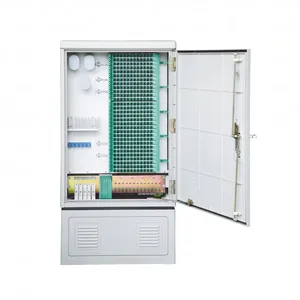
JFDC-288A Fiber Distribution Cabinet
288 ports, SMC shell, IP65, wall/ground mounting. Same hardware sold as FDH or ODC in different regions.
View Product →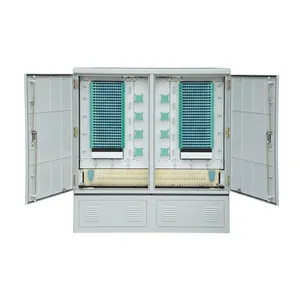
JFDC-576A Fiber Distribution Cabinet
576 ports, dual-door SMC cabinet, IP65. High-density outdoor fiber distribution for backbone and ring networks.
View Product →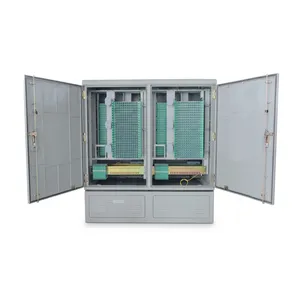
JFDC-1152A Fiber Distribution Cabinet
1,152 ports, 4-door SMC cabinet, IP65. Maximum capacity for large-scale FTTH deployments and data center interconnects.
View Product →References
- The Fiber Optic Association (FOA) — ODN reference guide and fiber glossary
- ITU-T G.984 — GPON architecture standard defining ODN functional blocks
Key takeaway
FDC, FDH, and ODC are three names for the same outdoor fiber distribution cabinet. The naming depends on which region you are buying for — not on any technical difference. The confusion that actually costs money is between these large cabinets (144–1,152+ ports) and smaller downstream devices like FDTs (4–96 ports). Always specify by function, port count, and IP rating. Never order by acronym alone.
Related products
Related Articles

Fiber Distribution Cabinet Buying Guide
How to spec and select the right FDC for your FTTH project — port count, IP rating, material, and mounting options.
Read Article →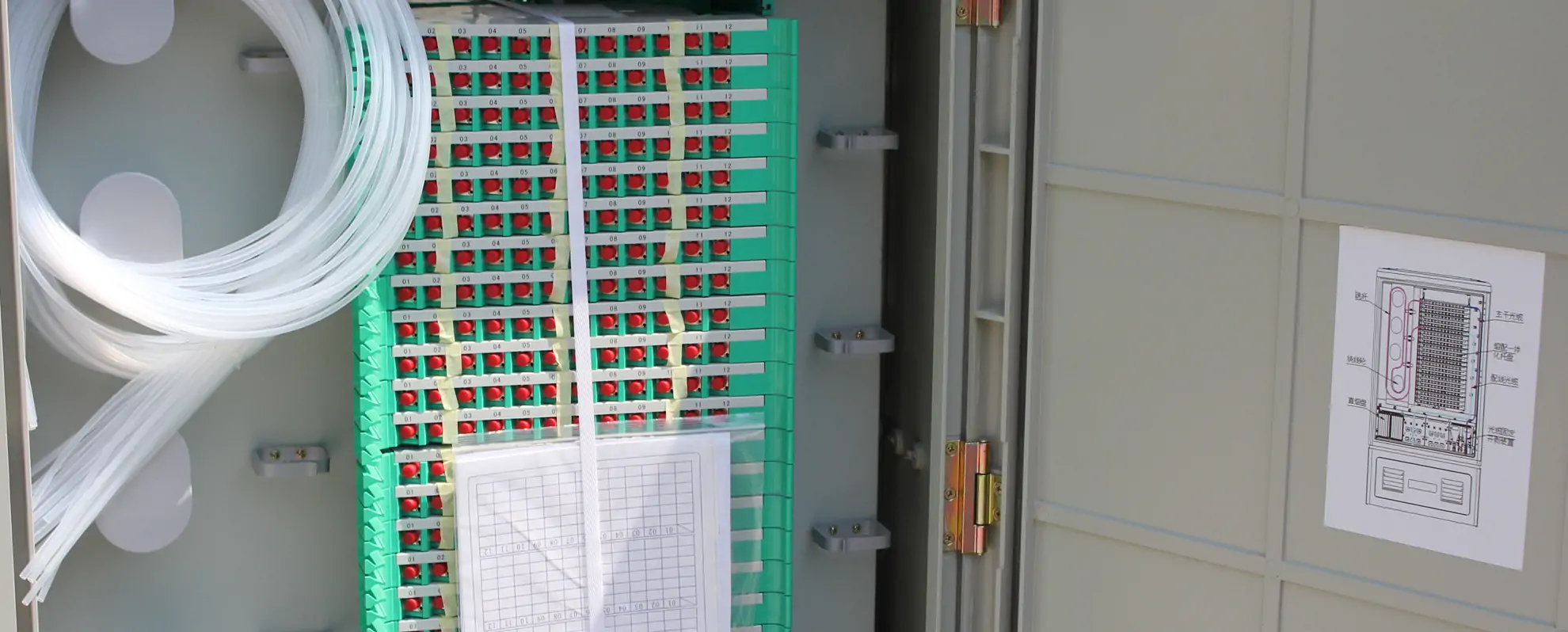
Fiber Cabinet Materials: SMC vs Steel vs ABS
Weight, IP rating, UV resistance, temperature range, cost, and lifespan compared for the three main enclosure materials.
Read Article →
FTTH Network Architecture Guide
Understand the full ODN hierarchy from OLT to ONT — and where each passive component fits in the signal path.
Read Article →