Shiji Photonics' 1.6T AWG Enters Shipment: The Signal ODN Infrastructure Buyers Should Not Ignore
By Jergeo Engineering Team | August 4, 2026 · Based on Yicai Global and CLS reports

Summary
On August 4, 2026, Shiji Photonics (688313.SH) confirmed its 1.6T AWG products have entered small batch shipment, with customer engagement and product introduction now underway. This is not just a company milestone — it is a supply chain signal that the 1.6T optical module era is transitioning from roadmap to physical reality. For ODN infrastructure, this means MPO patch panels, high-density fiber distribution equipment, and structured cabling will face a density upgrade wave. Here is what the numbers say and why it matters for anyone building or upgrading data center fiber infrastructure.
What Happened: 1.6T AWG Confirmed in Shipment
On August 4, 2026, an investor on the Shanghai Stock Exchange e-interaction platform asked Shiji Photonics whether its 1.6T AWG products had achieved mass shipment alongside the already-ramping 400G and 800G lines. The company's response, reported by Yicai Global (第一财经) and CLS (财联社):
"The company's 1.6T AWG products have achieved small batch shipment. We are orderly advancing customer engagement and product introduction."
This is the same language Shiji used in its April 21, 2026 investor survey and H1 2026 semi-annual report — but the repetition across multiple disclosure channels carries weight. In the Chinese listed company ecosystem, once a company confirms "small batch shipment" on the SSE platform, it means the product has physically left the factory and is in the hands of downstream customers. The next milestone is "mass shipment," which typically follows within 2–3 quarters once customer qualification cycles complete.
To put this in context: Shiji Photonics' AWG chip revenue in H1 2026 was RMB 383 million — already 70% of the RMB 550 million achieved in the full year 2025, as reported in the company's Sina Finance deep research report. The 1.6T AWG is now joining the 400G/800G AWG lines that are already generating real volume.
Why AWG Chips Are the Bellwether for Optical Interconnect
Arrayed Waveguide Grating (AWG) chips are the wavelength-division multiplexing engines inside high-speed optical transceivers. Every CWDM or LAN-WDM optical module — whether 400G, 800G, or 1.6T — contains an AWG chip that combines or separates multiple optical wavelengths onto a single fiber. Without AWG, there is no wavelength-division multiplexing. Without wavelength-division multiplexing, there is no efficient use of fiber bandwidth in data centers.
Shiji Photonics is not just any AWG supplier. The company is a certified supplier to Intel for 1.6T silicon photonics modules, with the 1.6T AWG chip passing Intel certification in 2025 at approximately 95% yield rate, according to Eastmoney research. The company also supplies indirectly to Nvidia's GB200/Rubin AI supercomputers through Coherent and Zhongji InnoLight.
When an AWG supplier confirms shipment, it means:
- Optical module manufacturers have qualified the chips and are integrating them into production transceivers
- The downstream 1.6T module supply chain — laser sources, modulators, DSPs, connectors — is simultaneously ramping
- Hyperscaler deployments are approaching the point where 1.6T modules move from qualification to volume purchase orders
In short: AWG shipment is the canary in the coal mine for the entire optical interconnect ecosystem.
What This Means for ODN Infrastructure
Here is where the signal reaches the physical layer. Every 1.6T optical module that ships requires corresponding changes in the fiber infrastructure that connects it. The relationship is direct and mechanical:
Higher fiber density per port. 1.6T optical modules, particularly silicon photonics designs using AWG-based wavelength division, typically require 16-fiber MPO/MTP connectors rather than the 8-fiber or 12-fiber connectors common in 400G deployments. Each MPO cassette and patch panel must support higher fiber counts in the same physical footprint.
Increased connector density. As AI clusters scale to tens of thousands of GPUs connected via a leaf-spine network topology, the total number of optical connections per data center hall increases proportionally. A single AI training cluster using 1.6T transceivers can require tens of thousands of MPO fiber connections.
Cabling complexity. 1.6T deployments using silicon photonics with external CW laser sources add additional fiber paths — each laser module needs its own fiber run to the optical module, increasing the total fiber count that ODN infrastructure must manage.
For ODN equipment — fiber distribution cabinets, MPO patch panels, fiber splice enclosures, structured cabling — this means the density specification is moving upward. Equipment designed around 12-fiber MPO cassettes may need to accommodate 16-fiber or even 24-fiber configurations to support 1.6T deployments. This is the same transition the industry went through when moving from 100G (LC duplex) to 400G (MPO-12/MPO-24), but compressed into a shorter timeline because AI infrastructure investment is moving faster than previous upgrade cycles.
The Full 1.6T Supply Chain: Where Each Component Stands
AWG is one piece of the 1.6T puzzle. Looking at the full supply chain gives a more complete picture of how close the industry is to volume deployment:
| Component | Key Supplier | Current Status |
|---|---|---|
| AWG Chip (1.6T) | Shiji Photonics | Small batch shipment; customer introduction underway |
| CW DFB Laser (100mW) | Shiji Photonics | Batch shipment; for silicon photonics light source |
| CW DFB Laser (400mW) | Shiji Photonics | Small batch shipment; for CPO external source |
| MPO/MTP Connectors | Shiji/Fukexima, US Conec | Mass production; entering global wiring vendors |
| 100G EML Laser | Shiji Photonics | Customer sample validation stage |
| 1.6T Optical Module | Zhongji InnoLight, Coherent | Sampling and qualification with hyperscalers |
Source: Shiji Photonics H1 2026 semi-annual report, investor platform disclosures, and Sina Finance industry research.
The pattern is clear: passive components (AWG, MPO) are already shipping, active components (CW DFB) are entering production, and the complete module integration is in qualification. The typical timeline from "AWG small batch" to "module volume deployment" is approximately 2–3 quarters. This puts 1.6T volume infrastructure deployment in the Q1–Q2 2027 timeframe.
For ODN equipment planners and data center operators, this is the signal to start ensuring that fiber distribution infrastructure specifications can support the density requirements of 1.6T deployments. The AWG chips have left the factory. The modules will follow. The fiber infrastructure needs to be ready.
What to Watch Next
Several upcoming milestones will confirm whether the 1.6T ramp is on track:
- Q3 2026 earnings (October 2026): Shiji Photonics' Q3 report will reveal whether AWG revenue continues to accelerate and whether 1.6T AWG moves from "small batch" toward meaningful volume contribution
- MOCVD equipment delivery: Shiji's prepaid equipment costs surged 241% to RMB 90 million in H1 2026, likely for MOCVD systems needed for CW DFB production. Equipment delivery in late 2026 or early 2027 would unlock CW laser capacity for 1.6T silicon photonics modules
- 100G EML validation result: If Shiji passes the 100G EML customer qualification (currently in sample validation), it would add an alternative light source path for 1.6T non-silicon-photonics modules
- Hyperscaler capex guidance: Google, Meta, and Microsoft Q3 earnings calls (October 2026) will provide visibility into 1.6T deployment timelines and optical module purchase commitments
The 1.6T transition is not a hypothetical scenario anymore. The chips are in the supply chain. The question is no longer "if" but "how fast" — and the answer will determine the timeline for ODN infrastructure upgrades across the global data center fleet.
Published: August 4, 2026. Sources: Yicai Global, CLS, Sina Finance, Shanghai Stock Exchange e-interaction platform.
Related Products
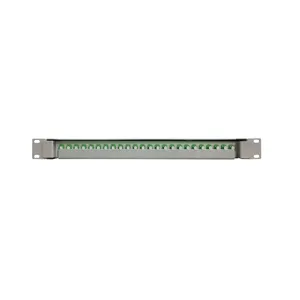
JODF-U3A Optical Patch Panel
24-96 ports sliding type patch panel for data center fiber management
View Product →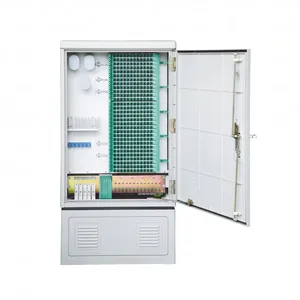
JFDC-288A Fiber Distribution Cabinet
288 ports outdoor FDC with IP65 rating for data center campus distribution
View Product →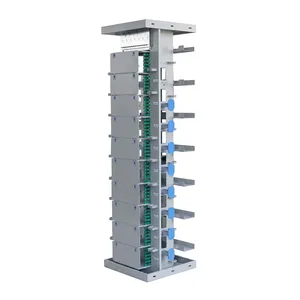
JODF-A1 Optical Distribution Frame
720 ports ODF with 42U capacity for main cross-connect rooms
View Product →