Meta's $279 Billion Data Center Lease Bet — What Big Tech's Infrastructure Lockdown Means for Fiber Optics and ODN Equipment
By Jergeo Engineering Team | July 31, 2026 · Based on Meta Q2 2026 regulatory filing

Meta Platforms has quietly locked in $279 billion in future data center lease commitments that do not yet appear on its balance sheet — and the number is growing fast. The disclosure, buried in Meta's Q2 2026 10-Q filing released on July 30, reveals a 53% jump from the $183 billion reported just three months earlier. An additional $68 billion in new leases were signed in July alone, scheduled to commence in 2027 and 2028. As first reported by Bloomberg, the obligations cover data centers, colocation facilities, and "certain network infrastructure," with lease terms stretching from just over a year to 30 years.
Summary
Meta's $279B in off-balance-sheet data center leases (up 53% QoQ), plus $68B more signed in July, is the single strongest signal yet that Big Tech is locking down data center capacity for a decade-long AI buildout. The top five hyperscalers now hold $969B in future lease commitments combined. For fiber optics and ODN equipment — patch panels, ODFs, distribution cabinets, splice closures — this means a multi-year construction cycle where passive infrastructure demand scales directly with every gigawatt of new capacity, and every fiber strand needs termination, management, and protection.
The numbers are striking by any measure. $279 billion in uncommenced leases is roughly the annual GDP of Finland. It is on top of Meta's active lease obligations, its $349.3 billion in irrevocable purchase commitments (which include servers, network infrastructure, and third-party cloud capacity), and a 2026 capital expenditure budget of $130–$145 billion — nearly double the $72.2 billion the company spent in 2025. CEO Mark Zuckerberg has pledged over $600 billion in U.S. investment by 2028, with the majority targeting AI data centers.
The Scale of the Lockdown
To understand the magnitude of what is happening, it helps to look at the full picture:
- $279 billion in uncommenced leases: Meta's future data center, colocation, and network infrastructure lease obligations as of June 30, 2026 — up 53% from $183B in Q1 (Bloomberg via Moneyweb, Jul 30 2026)
- $68 billion added in July alone: new agreements expected to start in 2027–2028 with 18–20 year terms
- $349.3 billion in irrevocable purchase commitments: covering cloud capacity, servers, network infrastructure, data center equipment, and Reality Labs hardware
- $147.2 billion in contingent cloud capacity: purchase options over the next five years
- $28 billion in residual value guarantees: on certain leases scheduled to start in 2029, also unrecorded as liabilities
The $279 billion figure is made possible by off-balance-sheet financing structures — special-purpose vehicles and joint ventures where institutional investors like Blue Owl Capital and BlackRock own the physical assets while Meta retains long-term usage rights. The Hyperion data center campus in Louisiana, now projected to cost over $200 billion and deliver 5GW of compute power, is the most prominent example of this model.
It's Not Just Meta — Big Tech Is Locking Down Capacity Everywhere
Meta's numbers are extraordinary, but the broader pattern is what matters for infrastructure suppliers. The top five U.S. hyperscalers — Meta, Microsoft, Amazon, Alphabet, and Oracle — collectively hold approximately $969 billion in future data center lease commitments. Roughly $662 billion of that total consists of leases that have not yet commenced and remain entirely off-balance-sheet.
Microsoft alone had $329.1 billion in uncommenced data center leases as of mid-2026, more than tripling from $92.7 billion a year earlier. Oracle's signed-but-not-started lease obligations reached $85.2 billion by the end of its fiscal year. Amazon has issued tens of billions in new debt during 2026, primarily to fund AI infrastructure. Goldman Sachs estimates that the five largest hyperscalers could issue up to $250 billion in debt in 2026 alone, rising to $400 billion by 2027.
What these numbers collectively describe is not a spending quarter or a fiscal year — it is a decade-long infrastructure building cycle that has already begun. Lease terms of 18–25 years mean these facilities will be constructed, expanded, and upgraded over an extended period, with each phase requiring new fiber infrastructure deployments.
Why This Matters for Fiber Optics and ODN Equipment
For the optical distribution network (ODN) supply chain — fiber patch panels, optical distribution frames, fiber distribution cabinets, splice closures, and cable management systems — the hyperscale data center construction boom has a direct, proportional impact. Here is why:
Fiber Infrastructure Goes in Before the GPUs
Every AI data center follows a predictable construction sequence. Civil works and shell construction come first. Then electrical and mechanical infrastructure. Then — before any GPU rack is rolled in — the fiber backbone, cross-connects, and rack-level patching must be in place. ODN equipment is among the earlier procurement categories in the buildout timeline. This means the demand wave for patch panels, ODFs, and distribution cabinets leads the actual deployment of AI compute capacity.
At the scale Meta is operating — Hyperion alone spans nearly 4,000 acres with up to nine buildings and 5GW of capacity — the fiber infrastructure requirements are massive. External fiber entry points, campus backbone distribution, building meet-me rooms, and rack-level patching all require passive ODN hardware.
AI Racks Need 4–8x More Fiber Ports
The fiber-to-rack ratio is the critical multiplier. Traditional enterprise data center racks typically require 12–48 fiber ports. AI training clusters running the latest GPU architectures require 96–192 fiber ports per rack — a 4-to-8-fold increase. Each additional fiber port means additional adapter plates, patch panels, splice trays, and management hardware.
The trend is accelerating. As optical interconnects push deeper into compute clusters — with scale-up architectures replacing copper backplanes with fiber — the fiber content per AI data center continues to increase. Corning CEO Wendell Weeks noted on the company's Q2 earnings call that if scale-up networks transition fully from copper to optical, combined with scale-out requirements, the fiber content per AI factory rises dramatically.
ODN Equipment Is Front-Loaded and Durable
Unlike AI chips that depreciate in 2–3 years, passive fiber infrastructure has a service life of 15–25 years with no planned obsolescence. Once installed, fiber distribution cabinets, ODFs, and patch panels remain in place through multiple generations of server and GPU upgrades. This has two important implications:
- Demand is concentrated in construction phases — each new data center build generates a large, one-time procurement wave for fiber management infrastructure, timed to the construction schedule
- Retrofit and expansion add incremental demand — as campuses scale from initial capacity to full buildout, additional ODN equipment is needed at each phase
With nearly $1 trillion in lease commitments across the top five hyperscalers, and lease terms extending to 2036 and beyond, the construction pipeline for ODN equipment is visible for years ahead.
The Full ODN Product Spectrum in Demand
The hyperscale AI data center buildout drives demand across the complete range of passive fiber infrastructure:
- Outdoor fiber distribution cabinets (FDC): campus entry points, route distribution, and weatherproof transition enclosures between external fiber cables and internal building risers. SMC and stainless steel construction with IP65/IP67 ratings are standard requirements for multi-decade service life
- Optical distribution frames (ODF): high-capacity frames in main distribution areas and meet-me rooms, managing backbone fiber routes between buildings, floors, and equipment zones. Sliding tray designs supporting LC, SC, and MPO connectors are essential for mixed-architecture environments
- Rack-mount fiber patch panels: the workhorse of data center fiber management, deployed at rack and row level. AI clusters require high-density panels supporting MPO/MTP trunk cables and LC breakout — typically 24–144 ports per 1U–4U enclosure
- Fiber splice closures: dome and inline closures for underground and aerial fiber routes connecting campus buildings and linking facilities to carrier networks
- Cable management and structural components: fiber routing systems, cable management hardware, and rack infrastructure that supports the dense fiber environments found in AI data centers
What is notable across all these categories is that the equipment specification is straightforward — precision manufacturing, consistent quality, reliable lead times, and scalable supply. These are not cutting-edge silicon products; they are engineered sheet metal, plastic, and ceramic components with well-understood performance requirements. The barrier to capturing demand is not technology — it is manufacturing capacity, quality consistency, and delivery reliability at scale.
A Structural Shift, Not a Cyclical Spike
There is an important distinction to make between a spending surge and a structural shift. The evidence increasingly points to the latter. When the world's largest technology companies are signing 18–25 year lease commitments totaling nearly $1 trillion, when bond issuance to fund AI infrastructure is tracking toward $400 billion per year, and when fiber manufacturers like Corning are saying they cannot make product fast enough — these are the signals of a decade-long infrastructure buildout, not a temporary spike.
For ODN equipment manufacturers, the question is not whether demand will grow — it is how quickly capacity can scale to meet it, and which companies can establish themselves as reliable suppliers at hyperscale volumes. The construction timeline is unforgiving: data center operators need fiber infrastructure delivered on schedule, because every day of delay pushes back GPU installation and revenue generation.
The numbers are large. The timeline is long. And the fiber optic infrastructure that supports this buildout — the patch panels, distribution frames, cabinets, and closures — is where the rubber meets the road.
Jergeo Data Center Fiber Infrastructure Solutions
As hyperscalers accelerate AI data center construction at unprecedented scale, the passive fiber infrastructure layer must keep pace. Jergeo Data Center Solutions cover the full range of ODN equipment needed for AI data center buildouts — from campus entry points to rack-level patching.
For rack-level fiber management in GPU clusters, Jergeo Fiber Patch Panels support high-density MPO/MTP and LC configurations in standard 19" rack-mount form factors — designed for the dense interconnect requirements of AI training architectures. Available in 12–144 port configurations with sliding tray designs for easy access and maintenance.
For main cross-connect and meet-me room environments, Jergeo Optical Distribution Frames provide high-capacity fiber management supporting up to 1,440 ports per frame — with modular designs that scale from initial deployment through phased capacity expansion, matching the multi-stage buildout model that hyperscalers use.
For campus-level outdoor distribution, Jergeo Fiber Distribution Cabinets are engineered in SMC and stainless steel with IP65/IP67 ratings — built for the 25-year service life that data center operators expect from their passive infrastructure.
Explore Data Center SolutionsRelated Products
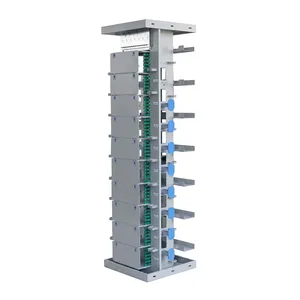
JODF-A1 Optical Distribution Frame
720 ports ODF with 42U capacity for main cross-connects
View Product →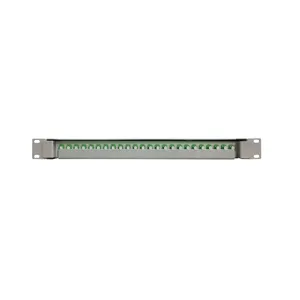
JODF-U3A Optical Patch Panel
24-96 ports sliding type patch panel for data centers
View Product →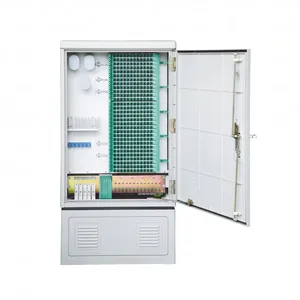
JFDC-288A Fiber Distribution Cabinet
288 ports FDC with wall/pole mounting options
View Product →Sources
This article is based on Meta Platforms' Q2 2026 10-Q regulatory filing (July 30, 2026), as reported by Bloomberg and Bloomberg via Moneyweb. Additional figures on industry-wide hyperscaler lease commitments from LSEG data and Goldman Sachs research, as reported in Sina Finance. All figures reflect publicly available data as of July 31, 2026.