Billionaire Mark Cuban Warns: AI Data Centers Could Become "Pickleball Courts" as Efficiency Gains Outpace Demand
By Jergeo Engineering Team | July 22, 2026 · Based on public remarks on the All-In Podcast

Mark Cuban, the billionaire entrepreneur and former NBA team owner, delivered a blunt assessment of the AI infrastructure boom during the July 21 episode of the All-In Podcast. His warning: if AI model efficiency continues to improve at the current pace, many of the massive data centers being built today will end up underutilized — and some could literally be converted into pickleball courts.
Summary
Mark Cuban flagged that AI data center power demands could strain local grids, pushing operators to prioritize fiber management and high-density ODF solutions that maximize rack space efficiency.
The Efficiency Wild Card
Cuban's argument centers on a specific risk: hyperscalers like Google and Meta are investing tens of billions of dollars in data center construction while simultaneously borrowing on top of their cash flows. Cuban called this approach "planning for perfection" — betting that AI demand will grow predictably for decades without significant technological disruption.
"If there's a price performance curve on AI that minimizes the power requirements, there's going to be a lot of data centers that are going to be turned into pickleball courts," Cuban stated.
His point is not that AI is a fad. It is that the computing power being built for today's AI models may not be needed if algorithmic efficiency improves dramatically. A breakthrough that doubles AI efficiency could serve more demand with less hardware, leaving expensive infrastructure idle.
Echoes of the 1990s Fiber Optic Boom
Cuban drew a direct parallel to the fiber optic boom of the late 1990s — a period he experienced firsthand. Telecom companies laid far more fiber-optic cable than the internet needed at the time. When bandwidth efficiency improved through new compression technologies, vast portions of the newly built networks sat unused. Dark fiber eventually sold for pennies on the dollar.
"We could be setting up for a similar scenario with data centers," Cuban warned. "Using decades-long debt to bet on technology needs ten or twenty years out is inherently risky."
The scale of current investment is enormous. According to market analyst The Kobeissi Letter, commitments for data center leases exceeded $850 billion in Q1 2026 alone, with Oracle, Microsoft, Meta, Amazon, and Alphabet all expanding their AI footprints simultaneously.
Not a Dot-Com Replay — But Still Dangerous
Cuban was careful to distinguish the current AI cycle from the dot-com bubble of 2000. "It's not the traditional dotcom bubble," he said. "Back then there were shitty companies going public getting crazy valuations... with companies that had no revenue, no traffic, no nothing."
Instead, he sees risk concentrated in private capital. "It could just destroy a lot of VCs and a lot of funds and a lot of PE, right? Because they're going all in."
He also noted that AI implementation remains significantly harder than many expect. "AI is a lot harder to implement than anybody expected," Cuban observed. "If you need to have forward deployed engineers, that tells you all you need to know about AI."
Other prominent investors share similar concerns. Jeremy Grantham, co-founder of GMO, has called AI "obviously a bubble" and compared it to railroad and internet overinvestment cycles. Apollo Global Management Chief Economist Torsten Sløk warned in July that markets could face a "painful repricing" if AI investment returns take longer than expected.
What This Means for Fiber Infrastructure and ODN Equipment
For companies that manufacture and supply ODN (Optical Distribution Network) equipment — fiber distribution cabinets, patch panels, splice closures, and outdoor enclosures — Cuban's warning deserves careful analysis. There are two sides to consider:
The Short-Term Bull Case Remains Strong
Regardless of whether AI data centers eventually face overcapacity, the construction phase itself drives massive demand for fiber infrastructure:
- Every data center needs fiber connectivity — AI training clusters require 96–192 fiber ports per rack (compared to 12–48 in traditional enterprise data centers), a 4-to-8-fold increase in cabling infrastructure
- ODN equipment is sheet metal, not silicon — Unlike AI chips that depreciate in 2–3 years, fiber distribution cabinets, patch panels, and splice closures have 15–25 year service lives with no planned obsolescence
- Mixed architecture environments — Even if AI efficiency improves, existing CPO (Co-Packaged Optics) and traditional fiber architectures will coexist, requiring panels that support LC, SC, and MPO adapters in the same chassis
- The 90s fiber analogy actually supports current demand — After the telecom bust, fiber infrastructure became the backbone of the internet. Even "dark fiber" eventually got lit. Physical infrastructure built today will likely find use regardless of AI efficiency curves
The Cautionary Signal
Cuban's warning is most relevant for capacity planning decisions by hyperscalers:
- If AI efficiency breakthroughs reduce the number of new data center builds, ODN equipment suppliers may see new project volume slow after 2027–2028
- Buyers may shift preference toward modular, scalable designs (like sliding ODFs and expandable cabinets) rather than building maximum-capacity facilities upfront
- Retrofit and upgrade demand could become more important than greenfield construction — existing facilities upgrading density rather than new builds
The Bottom Line for ODN Procurement
Mark Cuban's pickleball court quip is memorable, but his underlying argument is more nuanced: the risk is not that AI demand disappears, but that efficiency gains could outpace infrastructure buildout, creating excess capacity.
For fiber infrastructure procurement managers, the practical takeaway is:
- Short-term (2025–2027): Strong demand continues as current AI data center construction projects move from planning to deployment
- Medium-term (2028–2030): Monitor AI efficiency trends — if model compression and algorithmic breakthroughs accelerate, new construction may slow, but retrofit/upgrade demand will persist
- Long-term: Physical fiber infrastructure has demonstrated resilience through previous technology cycles. The 90s fiber oversupply eventually became the backbone of broadband internet
Unlike AI chips that depreciate rapidly, fiber distribution cabinets and patch panels are durable infrastructure. Whether the data centers they serve run at 50% capacity or 100%, the physical cabling and connection infrastructure remains essential. The question is not whether fiber will be needed — it is how fast the market scales to meet demand, and whether today's construction pace is front-loading infrastructure that will be used gradually over the next decade.
Jergeo Fiber Distribution Equipment
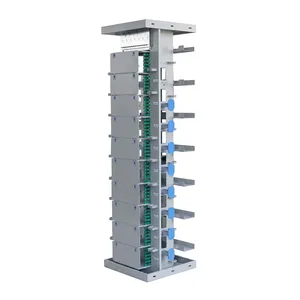
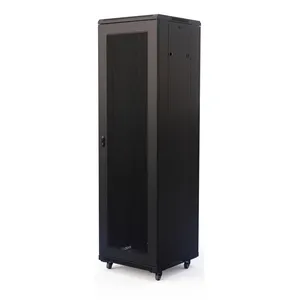
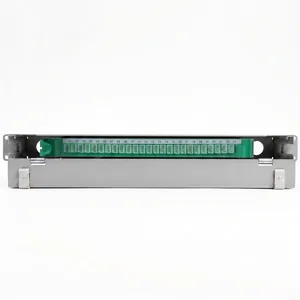
For data center and FTTH projects requiring high-density fiber management, Jergeo Fiber Distribution Cabinets are engineered for long-term reliability. Available in SMC (Sheet Molding Compound) and stainless steel construction, our JFDC series supports up to 288 ports in compact form factors, with IP65/IP67 ratings for outdoor deployment. Whether you are building new AI data center infrastructure or upgrading existing facilities, our modular cabinet designs scale with your network requirements — built to last 20+ years, not depreciate in 2.
Explore Fiber Distribution CabinetsRelated Products
Sources
This article is based on Mark Cuban's public remarks on the All-In Podcast episode aired July 21, 2026, as reported by Benzinga, IBTimes UK, and The Block Beats. Data center lease commitment figures ($850B in Q1 2026) from The Kobeissi Letter. Torsten Sløk's commentary from Apollo Global Management's July 2026 outlook. For ongoing coverage of AI infrastructure investment trends, see Light Reading and CRU Group data center market analysis.