Data Center Liquid Cooling Enters Industrial Phase: Supply Chain Signals Shift from Planning to Execution
By Jergeo Engineering Team | July 26, 2026 · Based on Yinlun (SZ:002126) investor disclosures
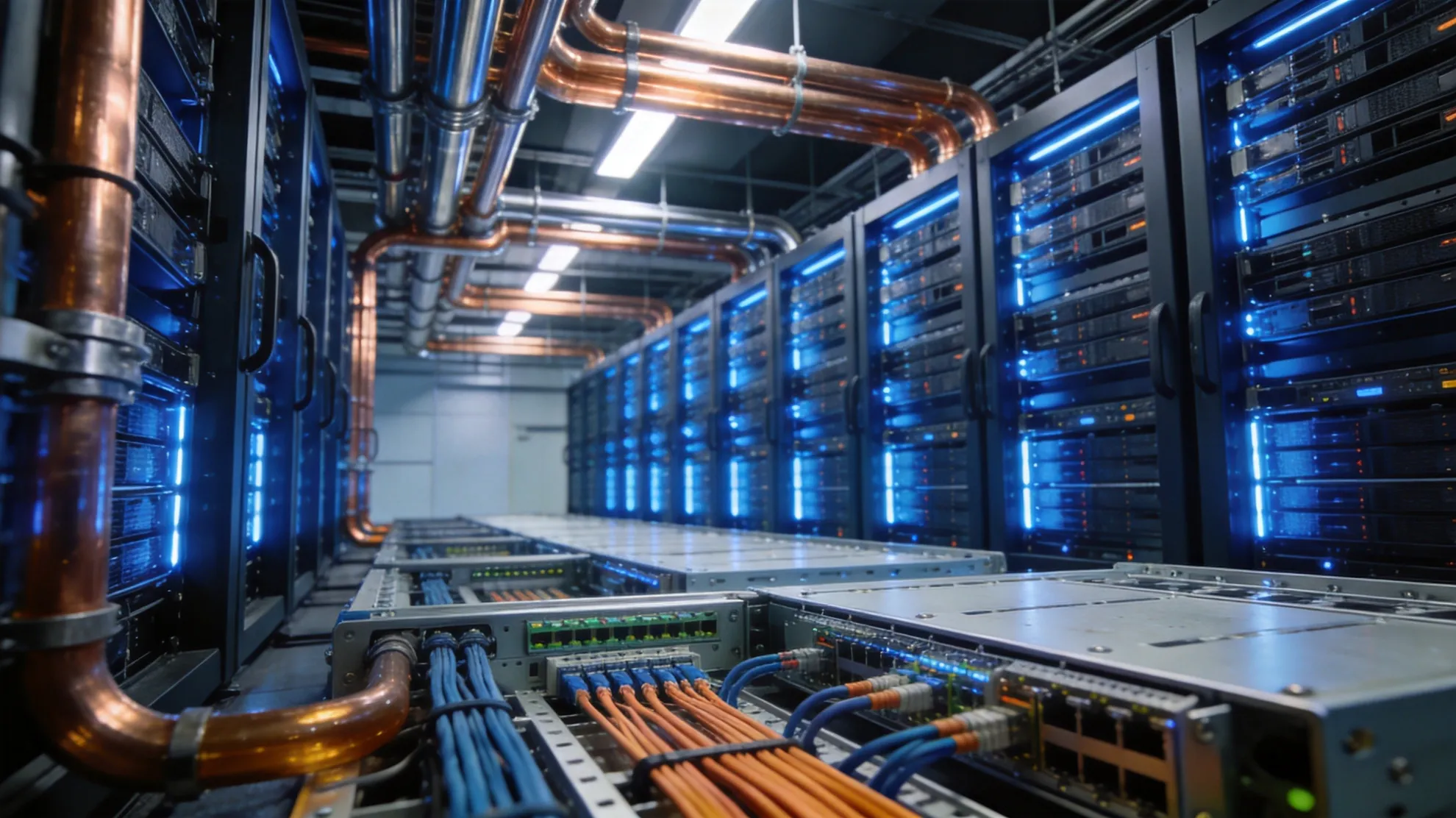
On July 25–26, 2026, Yinlun (浙江银轮机械, SZ:002126) — one of China's largest thermal management equipment manufacturers — disclosed on the Shenzhen Stock Exchange investor platform that its stainless steel plate heat exchangers for data center liquid cooling have entered sample validation with multiple module customers, and that some customers have already placed small batch orders.
Summary
Liquid cooling is moving from HPC labs into mainstream data centers, requiring fiber routing solutions that accommodate high-density liquid-to-chip loops while maintaining proper bend radius for patch cords.
The company stated: "Industry consensus holds that 2026 is the critical year for server liquid cooling to enter industrial-scale application." Yinlun has positioned itself as a liquid cooling module component supplier, with a mid-term development plan focused on stainless steel plate heat exchangers as the entry point.
Why This Matters Beyond Thermal Management
Heat exchangers and liquid cooling systems are not directly related to fiber optics. But the broader signal is important for anyone in the ODN (Optical Distribution Network) supply chain: when component suppliers in the data center physical infrastructure space report that products are moving from "R&D samples" to "mass validation" to "small batch orders," it means the entire construction cycle is accelerating.
Liquid cooling is no longer an experimental technology for AI data centers — it is becoming a mandatory requirement. NVIDIA's latest GPU architectures (Blackwell, Vera Rubin) operate at power densities that make air cooling physically insufficient. As liquid cooling deployment scales, the entire physical infrastructure stack — from power distribution to cable management to fiber connectivity — must scale with it.
The Connection: Liquid Cooling Drives Higher Fiber Density
The link between thermal management and fiber infrastructure is indirect but real:
- Higher power density = larger campuses: When individual racks consume 40–120kW (vs. 5–15kW for traditional IT), data centers must spread across more physical space with dedicated cooling infrastructure. Larger campuses mean more buildings, more meet-me rooms, more outdoor cable routes — and proportionally more fiber distribution cabinets, splice closures, and ODFs.
- Liquid cooling systems need monitoring: CDU (Coolant Distribution Unit) installations require temperature sensors, flow meters, and leak detection systems — many of which use fiber optic sensing for electromagnetic immunity in high-density electrical environments. These sensing networks add fiber connections to every cooled rack.
- Phased construction creates recurring procurement: Data center campuses are being built in phases (e.g., 55MW → 200MW → 1GW). Each phase requires new fiber infrastructure. Unlike IT equipment that depreciates in 2–3 years, ODN equipment has a 15–25 year service life — meaning each construction phase generates fresh demand for the same category of products.
- Mixed architecture environments: AI data centers often run both liquid-cooled high-density racks and air-cooled standard racks simultaneously. This hybrid environment requires flexible fiber management systems that can accommodate different connector types (LC, MPO, SC) and densities in the same chassis.
Market Scale: The Numbers Behind the Shift
Industry data backs this up:
- Global data center liquid cooling market: estimated at approximately RMB 94.2 billion (USD ~13 billion) in 2026, projected to reach RMB 147.8 billion in 2027 — a 57% year-over-year increase
- Liquid cooling penetration rate: expected to rise from 20% in 2025 to 37% in 2026, crossing 50% in 2027
- Supply-demand ratio: industry forecasts suggest liquid cooling supply-demand matching will drop to 0.9x in 2027, entering a supply-constrained state
These figures describe the thermal management market specifically, but the infrastructure multiplier effect extends to every physical layer of the data center — including fiber distribution.
What This Means for ODN Procurement
For procurement managers sourcing fiber distribution equipment for AI data center projects, here is what this means in practice:
- Volume timing: If liquid cooling components are entering small batch orders now (mid-2026), the corresponding fiber infrastructure procurement wave for these same projects will peak in late 2026 through 2027 — fiber management infrastructure is typically deployed before or parallel to IT equipment installation
- Specification requirements: AI data centers with liquid cooling tend to have higher fiber counts per rack (96–192 ports vs. 12–48 in traditional designs) and require mixed-connector panels that support both legacy and next-generation architectures
- Material considerations: In environments with liquid cooling piping, corrosion resistance becomes more important. SMC (Sheet Molding Compound) cabinets and stainless steel enclosures are preferred over standard cold-rolled steel for outdoor and high-humidity indoor deployments
- Modular deployment: Phased campus construction means procurement managers prefer ODN equipment that can be deployed incrementally — sliding ODF trays, expandable cabinet configurations, and pre-terminated cabling solutions that reduce on-site installation time
The Bottom Line
The data center industry is transitioning from "planning AI infrastructure" to "building AI infrastructure." Established thermal management suppliers reporting sample validation and small batch orders for liquid cooling components is concrete evidence that physical construction is underway at scale.
For the ODN equipment supply chain, AI data center demand is no longer a forecast — supply-demand data shows it is already underway. The companies that can deliver consistent quality, flexible configurations, and reliable lead times will win these multi-year procurement contracts.
Jergeo Fiber Distribution Equipment for AI Data Centers
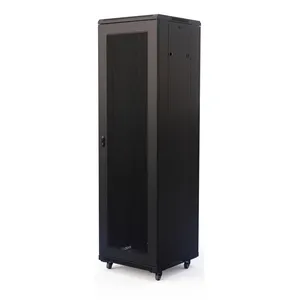
With AI data center construction underway globally, fiber management infrastructure needs to keep pace. Jergeo Fiber Distribution Cabinets work for both outdoor campus deployments and indoor high-density environments. Available in SMC and stainless steel construction with IP65/IP67 ratings, our JFDC series supports up to 288 ports in compact form factors — ideal for the phased expansion model that liquid-cooled AI data centers require.
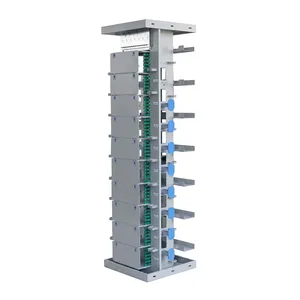
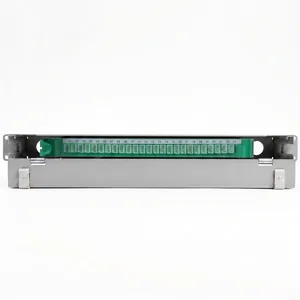
For indoor meet-me rooms and cross-connect closets, Jergeo Optical Distribution Frames provide high-capacity fiber management with sliding tray designs that support LC, SC, and MPO connectors in the same chassis — essential for mixed-architecture AI environments.
Explore AI Data Center SolutionsRelated Products
Sources
This article is based on Yinlun's (SZ:002126) investor platform disclosures on July 25–26, 2026, as reported by Securities Daily (证券日报), Securities Times (证券时报), and Sina Finance (新浪财经). Market size and penetration rate data from industry research reports cited in public financial media. All information is from publicly available sources. For further reading on data center liquid cooling trends, see Light Reading and CRU Group data center infrastructure market analysis.