Furukawa Electric Invests 100 Billion Yen to Double Fiber Capacity — What ODN Equipment Buyers Need to Know
By Jergeo Engineering Team | August 5, 2026 · Based on CLS (财联社) and EE Times China reports
Summary
On August 4, 2026, Furukawa Electric announced a 100 billion yen investment to double its optical fiber production capacity across Japan, the US, Brazil, and India, with new capacity coming online in H2 FY2028. The company also confirmed long-term purchase commitments from customers already in place. Combined with 55 billion yen in data center cooling investments across Asia, Furukawa targets 8x data center-related profit growth by FY2031. For ODN equipment buyers, this confirms that fiber infrastructure buildout is a multi-year structural trend — every new fiber deployed requires passive infrastructure: splice closures, distribution cabinets, ODFs, and patch panels.
Furukawa Electric is not making speculative bets. The company explicitly stated it has secured long-term purchase commitments from customers before approving this investment. In the fiber industry, this language means hyperscalers have signed binding volume agreements — the demand is locked in, not hypothetical.
The Scale of Japan's Fiber Capacity Race
Furukawa's announcement is the latest move in what has become a full-scale capacity arms race among Japan's Big Three fiber manufacturers. The combined investment is staggering:
- Furukawa Electric: 100 billion yen to double capacity (Japan, US, Brazil, India)
- Fujikura: Up to 300 billion yen to quadruple AI data center fiber capacity by FY2028
- Sumitomo Electric: Doubling fiber production capacity by FY2028 vs. FY2024 levels
Together, these three companies account for a large share of global fiber supply outside China. When they all expand simultaneously, it signals an industry-wide consensus: the current fiber shortage will not self-correct. Demand is structurally outpacing supply, and the gap is widening.
This mirrors what we saw with Corning's 10x US capacity expansion in July 2026. The pattern is clear across both US and Japanese supply chains: fiber manufacturers are building for a world where AI data centers consume fiber at rates previously unimaginable.
13,824-Core Cable: Density Is the New Metric
Beyond raw capacity, Furukawa is pushing the technology envelope on fiber density. In March 2026, the company's subsidiary Lightera began mass production of 13,824-count optical fiber cable — roughly double the fiber density of conventional designs, within the same cable cross-section.
Why does density matter for data centers? Because conduit space is finite. Hyperscale AI clusters with tens of thousands of GPUs need massive fiber counts between switches, servers, and storage. Running new conduit is expensive and time-consuming. Doubling the fiber count per cable is the most cost-effective way to scale bandwidth within existing infrastructure.
For ODN equipment, higher-density cables create specific requirements:
- Higher-density patch panels: 13,824 fibers need termination at both ends — traditional 48-port panels won't scale
- Larger splice closures: more fibers per cable means more splice trays per closure
- Heavier cable management: distribution cabinets must accommodate larger bend radius requirements for high-fiber-count cables
The Cooling Connection: Why Furukawa Is Betting on Two Fronts
Furukawa's 55 billion yen investment in data center cooling components across Asia is not a distraction from its fiber business — it's a recognition that AI data centers have two critical infrastructure bottlenecks:
- Fiber connectivity: getting data between GPUs, racks, and buildings
- Thermal management: keeping high-power equipment from melting
The company's 2031 target — 8x data center-related profit vs. FY2026 — reflects confidence that both demand vectors will grow simultaneously. For ODN equipment suppliers, this dual-track strategy is instructive: data center infrastructure procurement is not just about fiber. Cooling, power distribution, and cable management are all part of the same physical deployment.
What This Means for ODN Equipment Buyers
When fiber manufacturers invest hundreds of billions of yen to expand capacity, the downstream passive infrastructure supply chain must scale proportionally. Here's the direct impact on ODN equipment categories:
Fiber Distribution Cabinets (FDC)
Outdoor FDCs are the aggregation points where fiber cables from multiple directions are terminated, spliced, and distributed. Every new data center campus, every fiber route expansion, every last-mile FTTH deployment requires FDCs. As Furukawa's doubled fiber production flows into the market, FDC demand will scale with it.
Optical Distribution Frames (ODF)
Inside data centers, ODFs serve as the main cross-connect infrastructure. Higher fiber counts from denser cables require higher-density ODF configurations. The 13,824-core cables Furukawa is producing will need ODFs designed to handle extreme fiber densities without sacrificing accessibility.
Splice Closures
Every fiber joint needs protection. High-fiber-count cables require closures with more splice trays and larger internal volumes. The shift toward higher-density cables means closures must evolve to handle 3,456+ fibers per closure point, not the traditional 144-288 fiber designs.
Fiber Patch Panels
At the equipment interface, patch panels convert cable infrastructure into accessible adapter ports. AI data centers with 1.6T optical interconnects (see our analysis of 1.6T AWG shipment signals) require even higher panel densities, as each optical module uses multiple fibers.
The Timeline: Why 2028 Matters
Furukawa's new capacity comes online in H2 FY2028 — approximately two years from now. This timeline matters for ODN equipment planning:
- Now through 2027: Lead time for ODN infrastructure procurement. Data center operators planning for 2028 fiber availability need to order passive equipment 12-18 months in advance.
- H2 2028: New fiber capacity begins production. ODN equipment must be in place before fiber arrives — you can't deploy fiber without termination and management infrastructure.
- 2029-2031: Full ramp period. This is when the volume impact hits hardest, and supply chain bottlenecks shift from fiber to passive components.
The operators who secure ODN equipment supply now will have a clear advantage over those who wait until 2028 to start procurement.
Bottom Line
Furukawa's 100 billion yen bet — combined with the parallel investments from Fujikura and Sumitomo — is the strongest signal yet that AI-driven fiber demand is not a hype cycle. It's a structural shift in global infrastructure investment. The companies making the bets have locked in customer commitments. They're not building on speculation.
For ODN equipment buyers, the implication is clear: the passive infrastructure supply chain must scale at the same pace as fiber production. Every meter of new fiber needs splice closures, distribution cabinets, ODFs, and patch panels. The question is not whether this demand will materialize — it's whether your supply chain is ready.
Related Products
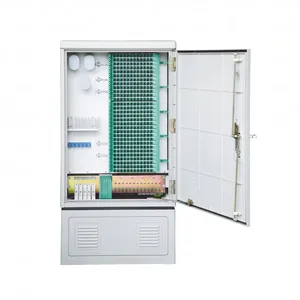
JFDC-288A Fiber Distribution Cabinet
Outdoor fiber management cabinet supporting up to 288 fiber cores for campus deployment
View Product →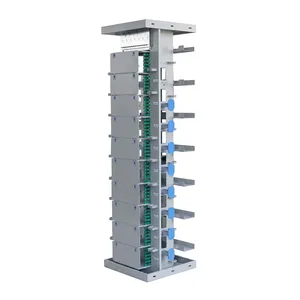
JODF-A1 Optical Distribution Frame
High-density indoor ODF for data center main cross-connect and fiber management
View Product →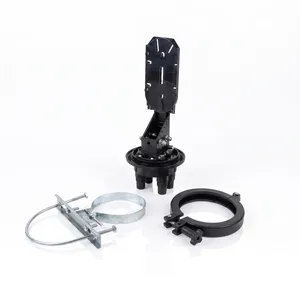
JFSC-L144A Fiber Splice Closure
Horizontal splice closure supporting 144 cores for outdoor fiber joint protection
View Product →